Click here to browse our On The Mend Portfolio!
Butterfly Pea Powder has moved from a niche botanical ingredient into a visible part of modern food and beverage culture. Its deep blue color can transform lemonade, smoothies, lattes, rice, and desserts without artificial-looking dyes. A small spoonful can create a striking visual effect. That matters in cafés, product photography, and social media-driven purchasing.
Demand also reflects changing consumer priorities. Many buyers seek plant-based ingredients, caffeine-free drink options, and recognizable names on product labels. Butterfly Pea Powder naturally contains anthocyanins, the pigments responsible for its blue color. When mixed with acidic ingredients, such as lemon juice, its color may shift toward purple or pink. This simple reaction creates an interactive experience, not just a flavor choice. However, color intensity and taste can vary with cultivation, drying, storage, and processing methods.
The commercial story is promising, but incomplete. Some marketing claims stretch beyond reliable evidence. Butterfly Pea Powder should not be presented as a cure, replacement for treatment, or guaranteed health solution. Responsible suppliers should provide botanical identification, contaminant testing, allergen information, and clear usage guidance. Buyers should also check whether the product is intended for food use, rather than cosmetic or decorative applications. In professional product development, consistency matters as much as appearance. A beautiful blue sample is not enough. Questions about origin, stability, dosage, and consumer safety still deserve careful attention. That balance helps explain why demand is growing, while leaving room for more transparent research and better industry standards.
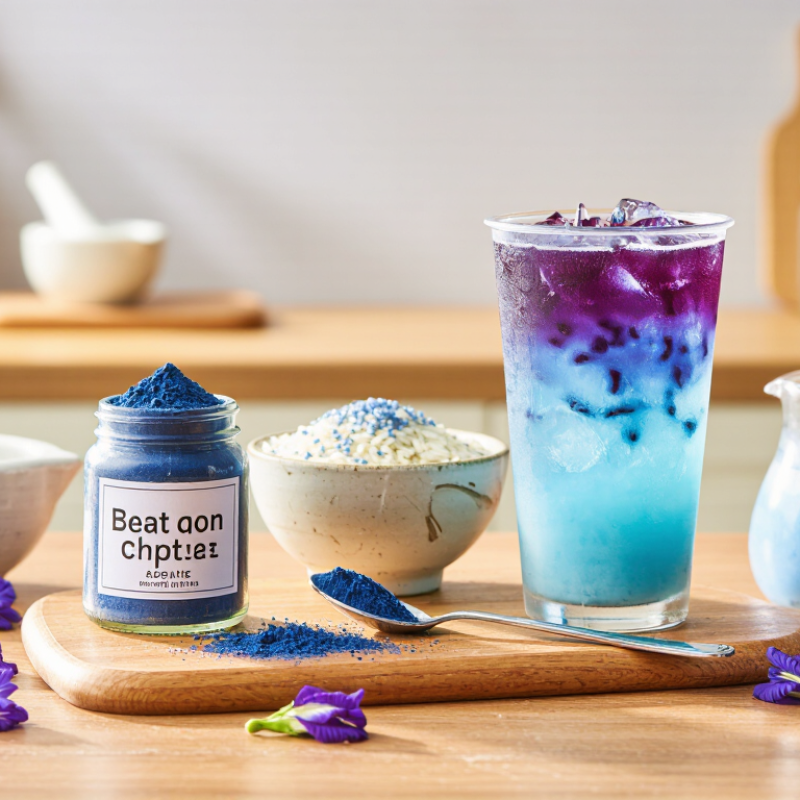
Butterfly pea powder comes from dried butterfly pea flowers, botanically called Clitoria ternatea. The flowers are gently dried and ground into a fine blue powder. Its vivid color comes mainly from natural anthocyanins, which are plant pigments also found in berries.
The powder has a mild, earthy flavor. Some people notice a faint herbal taste. It blends well into tea, smoothies, rice, yogurt, and baked recipes.
Its color can change dramatically when mixed with acidic ingredients. Lemon juice, for example, may shift blue toward purple. This makes it popular in visually appealing foods and drinks.
The science deserves careful wording. Butterfly pea contains useful plant compounds, but it is not a miracle ingredient. Research on its health effects is still developing. I would not treat every online claim as proven. Product quality can also vary because drying methods, storage, and grinding affect color and freshness. Choose food-grade powder from a supplier that provides clear ingredient and testing information.
Tips: Start with a small amount, such as half a teaspoon. Mix it into warm liquid first to reduce clumping. Store the powder in a sealed container away from sunlight and moisture. If you have allergies or take medication, ask a qualified healthcare professional before regular use.
Why Is Butterfly Pea Powder in High Demand?
How Is Butterfly Pea Powder Made?
Butterfly pea powder begins with carefully selected butterfly pea flowers. Producers usually harvest fully opened flowers when their blue color is strong. The flowers are sorted by hand to remove stems, dust, and damaged petals. They are then washed gently and drained. Clean handling matters because excess moisture can encourage mold growth.
Next, the flowers are dried at a controlled, low temperature. Direct, intense heat may weaken their natural color and delicate aroma. Some producers use shaded air-drying, while others use food-safe drying equipment. The dried flowers should feel crisp before grinding. A mill turns them into a fine powder, and a sieve removes larger pieces. Quality checks may include moisture testing, color inspection, and microbial analysis. Every batch is slightly different. That detail is easy to overlook.
Tips: Store the powder in an airtight, light-resistant container. Keep it away from steam, heat, and wet measuring spoons. A fresh powder should have a mild plant-like scent, not a sour or musty odor. Mix a small amount into cool water first. This helps reveal its color and texture before adding it to recipes.
| Dimension | Data Point | Typical or Established Information | Relevance to Demand and Production |
|---|---|---|---|
| Botanical Identity | Source plant | Clitoria ternatea, a leguminous flowering plant commonly known as butterfly pea. | Its recognizable botanical source supports demand for naturally colored food and beverage ingredients. |
| Natural Color | Main pigment group | The blue color is mainly associated with water-soluble anthocyanins known as ternatins. | Consumers and food manufacturers value the powder as a plant-based alternative to many synthetic colorants. |
| Color Response | Effect of acidity | Infusions are generally blue near neutral pH and can shift toward purple, violet, or pink as acidity increases. | The visible color change makes the powder useful in drinks, desserts, confectionery, and culinary presentation. |
| Plant Material | Part commonly processed | Fully opened butterfly pea flowers are typically collected, separated from unwanted plant material, and prepared for drying. | Using flowers helps produce a more consistent color and reduces unwanted stems, leaves, and foreign matter. |
| Harvest Quality | Important incoming checks | Color intensity, cleanliness, absence of visible mold, foreign matter, insects, and abnormal odor are key quality indicators. | Careful sorting reduces contamination risk and improves the consistency of the finished powder. |
| Primary Processing | Cleaning and sorting | Flowers are inspected and cleaned using manual sorting, sieving, or other food-safe separation methods before drying. | Cleaning is necessary because raw botanical materials may contain soil particles, insects, and other plant fragments. |
| Moisture Reduction | Drying methods | Common approaches include shade drying, solar drying, and controlled hot-air drying. The method should limit excessive heat, light, and humidity. | Drying lowers water activity, helps slow microbial growth, and improves storage stability. |
| Pigment Protection | Key processing risks | Excessive heat, prolonged exposure to light, oxygen, and moisture can reduce color quality and promote pigment degradation. | Controlled drying and protective packaging help retain the characteristic blue color and functional value. |
| Milling | Powder formation | Once sufficiently dry, the flowers are milled and passed through a sieve to obtain a more uniform particle size. | Uniform particles improve mixing, dispersion, appearance, and portion control in finished products. |
| Solubility | Behavior in water | The powder contains water-soluble color compounds, but whole botanical powder may also include insoluble plant fiber and natural solids. | It is suitable for smoothies, teas, bakery mixes, and desserts, although complete clarification is not expected in every application. |
| Flavor Profile | Taste and aroma | Butterfly pea powder is generally mild and earthy, with a less intense flavor than many strongly aromatic herbs and spices. | A relatively mild flavor allows the color to be used in a broad range of sweet and beverage formulations. |
| Common Applications | Food and beverage uses | Typical uses include herbal beverages, smoothies, natural blue food coloring, desserts, baked goods, sauces, and decorative toppings. | Its versatility expands the number of product categories that can use the ingredient. |
| Storage Conditions | Recommended protection | Store in a cool, dry, dark environment in a tightly sealed, food-grade package protected from moisture and oxygen. | Proper storage helps preserve color, aroma, flowability, and microbiological quality during its shelf life. |
| Quality Testing | Typical laboratory checks | Moisture, water activity, microbiological quality, foreign matter, color characteristics, and pesticide or heavy-metal compliance may be evaluated. | Testing supports food safety, batch consistency, and compliance with applicable regulations. |
| Consumer Appeal | Main demand drivers | Demand is supported by interest in botanical ingredients, visually distinctive foods, plant-based products, and naturally derived colors. | The ingredient combines visual novelty with a simple plant-based positioning, making it attractive for product innovation. |
Butterfly pea powder is in high demand partly because its color feels almost theatrical. The vivid blue comes from anthocyanins called ternatins, natural pigments concentrated in the flower. When the powder meets an acidic ingredient, its color can shift toward violet, purple, or soft pink. A squeeze of lemon may create a visible change within seconds. This makes ordinary drinks, rice, icing, and desserts look more distinctive without artificial-looking dyes.
Color performance is not always identical. Harvest maturity, drying temperature, moisture, and storage light can affect the final shade. In my experience, a freshly opened powder usually looks brighter than one exposed to a warm kitchen shelf. The liquid’s acidity also matters. Measure it rather than guessing. Food professionals often check pH when consistent color is important, especially in commercial recipes. The powder should also be sourced from a reputable supplier with clear testing and handling information. Natural color is expressive, but it is not perfectly predictable.
Tips: Mix the powder with a small amount of warm water first. This prevents dry clumps and spreads the pigment evenly. Add acidic ingredients slowly, then observe the color after each addition. Protect unused powder from heat, humidity, and direct light. A deeper blue is not automatically better; flavor, freshness, and safe handling still deserve attention.
Butterfly pea powder is gaining attention because it offers vivid blue color from a plant source. Its color can shift toward purple when mixed with lemon juice. This simple visual change suits beverages, desserts, and powdered drink mixes.
The global natural food colors market was valued at about USD 1.7 billion in 2023, according to Grand View Research. The same report projects steady growth through 2030.
This broader trend supports demand for recognizable botanical ingredients.
Production experience shows that quality depends on harvest timing, drying temperature, and grinding control. Poor drying can create a dull color and grassy odor. Fine powder also disperses better in cold liquids, but it may clump without careful packaging.
A 2024 report from Future Market Insights identifies clean-label ingredients and plant-based product development as important market drivers.
However, butterfly pea powder is not a magic ingredient.
Research on its functional benefits remains less extensive than consumer interest suggests. Some suppliers may overstate antioxidant claims. Buyers should request botanical identification, moisture results, microbial testing, and color stability data.
The market is expanding. Quality control still decides whether demand becomes repeat purchasing.
Butterfly pea powder is increasingly used because it brings a striking blue color without artificial-looking brightness. It comes from the dried flowers of Clitoria ternatea. When mixed with lemon or lime juice, its color can shift toward violet or soft pink. The change feels almost theatrical.
In drinks, the powder works well in iced tea, smoothies, sparkling water, and alcohol-free mocktails. I usually blend a small amount with warm water first. This prevents stubborn blue clumps from floating on the surface. Coconut milk, oat milk, and yogurt can soften its mild earthy flavor. Too much powder, however, may taste grassy. That mistake is easy to make.
Food makers also add it to rice, chia pudding, frosting, noodles, and baked goods. It can tint pancakes or energy bites, although heat may reduce the brightness. A cool dessert often shows the clearest color. The powder should be food-grade, finely milled, and stored away from moisture and sunlight. Color intensity can vary between batches, so a recipe may need adjustment. This is an ingredient, not a guaranteed visual effect. In professional kitchens, I would test the powder with the exact liquid, acidity, and cooking temperature before serving it to guests. kontaktannonser
Butterfly pea powder is widely used as a natural blue food colorant in teas, lemonades, smoothies, desserts, and cocktails. Its anthocyanins respond to acidity: acidic ingredients such as lemon or lime can shift the color from blue toward purple or pink.
