How to Choose ESD Latex Gloves for Electronics Assembly?
Choosing Esd Latex Gloves for electronics assembly requires more than checking a product label. The right pair must control static charge, protect delicate components, and support steady hand movements. A glove may show an attractive resistance value yet perform poorly on a humid production line. Details matter.
ESD consultant Stephen Halperin has stated, “A glove is only one part of the ESD control system.” That point deserves attention. Effective protection also depends on grounded workstations, suitable flooring, correct wrist straps, and disciplined handling procedures. This guide examines glove resistance, charge generation, latex formulation, powder-free construction, thickness, grip, and operator comfort. It also considers allergy risks, because latex sensitivity can affect workplace safety and productivity.
Fit matters too. Loose fingertips can snag tiny connectors, while overly tight gloves may cause fatigue during long assembly shifts. Buyers should review manufacturer test data and confirm performance under actual factory conditions. Standards such as ANSI/ESD S20.20 and IEC 61340-5-1 provide useful frameworks, but certification alone does not guarantee practical suitability. Small mistakes spread.
A reliable selection process compares several samples, measures their electrical behavior, and gathers feedback from trained operators. It should also examine packaging, storage, replacement frequency, and contamination control. No glove is perfect for every assembly environment. Some choices will need reconsideration after real production trials. This article explains how to make that decision with greater confidence, clearer evidence, and fewer costly assumptions.
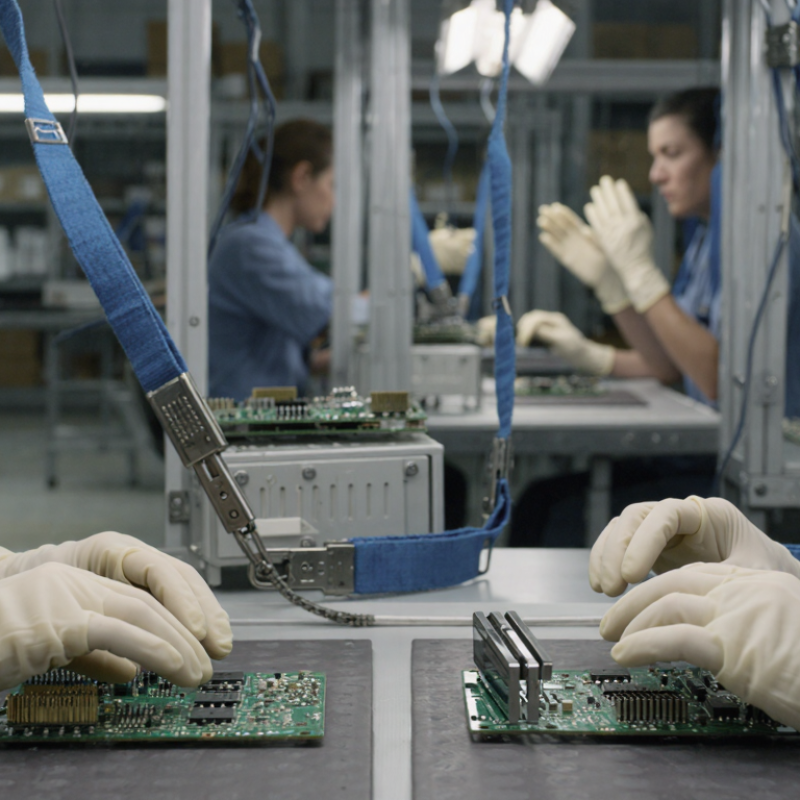
Define ESD Risks in Electronics Assembly
In electronics assembly, ESD risk begins with unwanted electrical charge. It can build on workers, garments, tools, trays, and packaging. A dry room, fast movement, or plastic surface can increase that charge. The discharge may be invisible and too brief to feel. Sensitive circuits can still suffer immediate failure or hidden damage.
From my assembly inspections, gloves often receive too much attention. The material alone does not define protection. Ordinary latex can generate charge through friction, especially when it contacts plastic components. ESD latex gloves should have documented resistance and controlled charge decay. Their performance must match the facility’s grounding system, humidity range, and handling process. Check the fingertips, palms, and seams. Small differences matter.
Risk also depends on the component itself. Modern devices may tolerate very little voltage, while larger parts can withstand more. A worker may touch a connector, slide a board across a tray, or remove tape from a package. Each action can create a discharge path. I once saw a low failure rate treated as proof of safety. That was a weak assumption. Latent ESD damage may appear days later during testing or field use. Glove selection should therefore follow measured resistance, regular testing, proper fit, and actual work observations. Comfort matters too. Uncomfortable gloves may cause workers to adjust them repeatedly, creating another charge source.
Compare Latex, Coating, and Static-Control Features
Choosing ESD latex gloves for electronics assembly requires more than checking the word “antistatic.” Latex provides excellent elasticity, fingertip sensitivity, and comfort during long soldering or inspection tasks. It can also reduce hand fatigue when operators handle tiny connectors. However, natural latex may cause skin sensitivity, and its electrical behavior is not automatically suitable for ESD work. Select powder-free gloves with documented surface resistance and charge-decay results.
Coating changes the balance. A thin polyurethane or similar coating can improve grip on smooth circuit boards, screws, and plastic housings. Yet, a full coating may reduce breathability and interfere with tactile feedback. It may also separate the hand from a conductive work surface. Partial fingertip coating often offers better control, but only when the coating itself has verified static-control properties. Test the actual glove, not just the coating material.
Static-control performance depends on the complete workstation. Check the glove with the operator, clothing, grounded bench, and humidity conditions. A glove that performs well in a dry test room may behave differently near a heated assembly station. Follow recognized ESD control practices and request lot-specific test data from the supplier. Replace gloves when they become visibly worn, contaminated, or stretched. One practical lesson is easy to miss: comfort can encourage correct use, but comfort alone does not prove protection. I would also review the choice after production begins, because real handling feedback sometimes exposes weaknesses that laboratory numbers miss.
Check Fit, Comfort, Cleanliness, and Durability
How to Choose ESD Latex Gloves for Electronics Assembly?
Fit should be checked before electrical performance. A loose cuff can catch on fixtures, while wrinkled fingertips reduce placement accuracy. Choose a snug glove that follows each finger without compressing the hand. Operators should bend, pinch, and handle small connectors for several minutes. If seams rub after ten minutes, production comfort will likely decline during an eight-hour shift. Short cuffs are convenient, but they may expose the wrist during frequent reaching.
Comfort also affects compliance. Workers may remove uncomfortable gloves, even when procedures are clear. Powder-free latex reduces residue, but latex sensitivity still requires careful screening. Cleanliness needs measurable control. ISO 14644-1:2015 sets 3,520 particles per cubic meter as the limit for particles ≥0.5 micrometers in ISO Class 5 air. Gloves should be tested for particles, extractable residue, and ionic contamination when assemblies are highly sensitive. Clean-looking is not clean enough.
Durability must include ESD behavior after flexing, washing, or repeated donning. ANSI/ESD S20.20 and IEC 61340-5-1 support a controlled ESD program, but glove resistance should be verified within the actual workstation. A glove may pass one bench test and fail after sweat exposure. That detail is easy to miss. Check resistance before use and during scheduled audits. Review fingertip wear, pinholes, and cuff stretching. No selection is perfect; even a comfortable glove may require replacement sooner than expected.
Verify Standards, Testing, and Workplace Compatibility
Choosing ESD latex gloves for electronics assembly begins with verified evidence, not packaging claims. Check whether the gloves support your facility’s ESD control program and align with IEC 61340-5-1 or applicable regional requirements. ANSI/ESD S20.20 can guide the wider program, but it does not automatically certify every glove. Request current test reports, lot numbers, test methods, and resistance results from the supplier. Independent laboratory data is more dependable than a general “ESD safe” statement.
Test the gloves with the actual workstation, tools, garments, and humidity range. Measure surface resistance and, where required, charge decay under controlled conditions. A glove may perform well in a laboratory but behave differently beside a grounded metal bench. I have seen small fit changes create unexpected contact with exposed components. Finger movement matters. So does cuff coverage. Test them during normal assembly, not only while lying flat. Do not assume latex alone provides protection.
Workplace compatibility also includes powder-free construction, skin sensitivity, grip, seam quality, and cleanroom requirements. A tight glove may reduce dexterity. A loose glove may catch on connectors. Check replacement frequency and storage conditions. Keep records of incoming-lot checks and repeat testing after process changes. One overlooked issue is humidity; dry air can increase electrostatic behavior. Worker feedback should influence the final choice, although comfort alone cannot prove ESD performance.
